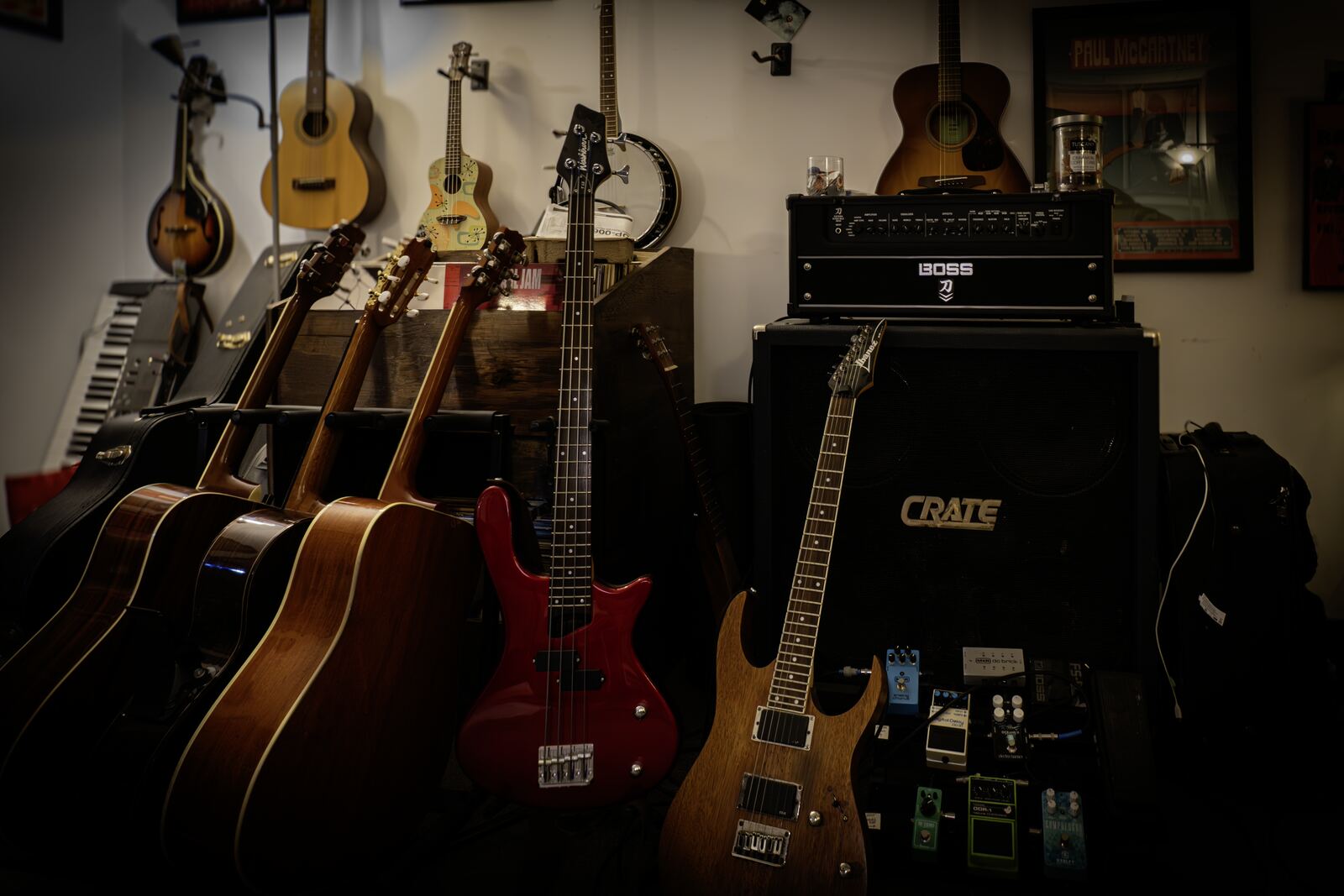
The right guitar depends on the music you want to play, and a cheap guitar that is set up well is easier to learn on than an expensive one that isn't. Both points are worth settling before the first lesson.
Types of guitar
| Type | Suits | Feel |
|---|---|---|
| Classical (nylon-string) | Classical repertoire, fingerstyle, folk | Soft, low-tension nylon strings; a wide, flat neck |
| Steel-string acoustic | Strummed and fingerpicked folk, singer-songwriter material, acoustic blues | Louder and brighter; firmer strings. Bodies run from small parlor and concert sizes to the larger dreadnought and jumbo |
| Acoustic-electric | The same, plus playing through a PA or amplifier | A steel-string acoustic with a built-in pickup and preamp |
| Electric, solid-body | Rock, metal, blues and most other styles | Light strings and a slim neck; needs an amplifier; resists feedback at high volume |
| Electric, semi-hollow | Blues, jazz, rock | Hollow wings around a solid center block; warmer, with some acoustic resonance |
| Electric, hollow archtop | Jazz | A fully hollow body with an arched top; round, warm tone; prone to feedback when loud |
| Seven-string and baritone | Metal and other low-register parts | A seven-string adds a low string, usually tuned to B; a baritone has a longer scale and is tuned lower, often a fourth below standard |
The kinds of guitar guide covers each type in more depth, with separate guides to electric guitar types and acoustic guitar types such as twelve-string, flamenco and resonator guitars. The guide to acoustic guitars, tonewoods and strings explains body sizes, the woods used for tops and backs, and how string choice changes the sound.
Choosing a first guitar
Let the music decide the type: nylon strings for classical, a steel-string acoustic for folk and singer-songwriter songs, an electric for rock, metal and most blues and jazz. Learning on the guitar the songs were played on means they sound right from the start.
Then check how hard it is to play. Three things decide that:
- Action, how high the strings sit above the frets. Every extra millimetre is more pressure on the fingertips.
- String gauge. Lighter strings are kinder to new fingers; heavier ones give an acoustic more volume.
- Setup, the adjustment of neck relief, action, nut height and intonation. The guitar setup guide explains each one, and alternate tunings covers drop, open and lowered tunings.
If you are not sure about a guitar you own or are about to buy, bring it, or the link to it, to the free intro visit. Amps and pedals come up later; the pedals and signal chain guide covers the electric side.
What lessons cover
- tab and standard notation;
- scales and chord shapes across the whole neck, and how they connect to keys;
- ear training: picking out intervals and chord changes by sound;
- the picking hand (strumming, alternate picking, fingerstyle) and clean chord changes;
- the songs you bring.
Songs you bring are written out as guitar parts: a beginner might get just the strummed changes or the opening riff, with fills and the solo saved for later, and Bill plays along on the other part from the start.
Each direction has its own page: classical, fingerstyle, blues, jazz, rock and metal, grunge and punk and folk and acoustic. The chord charts and the tuner are free to use at home.
What you need
- Your guitar, at every lesson.
- A tuner, clip-on or app.
- Picks, for steel-string and electric playing; a capo for acoustic.
- For electric guitar at home: a small practice amp and a cable. The amps guide explains how many watts that takes.
Questions
Is electric or acoustic guitar easier for a beginner?
An electric usually has lighter strings and lower action, so chords take less finger pressure. A steel-string acoustic needs firmer pressure but no amplifier. The music you want to play is the better guide.
What do guitar lessons cost at B# Music?
$35 for a private half hour each week.


