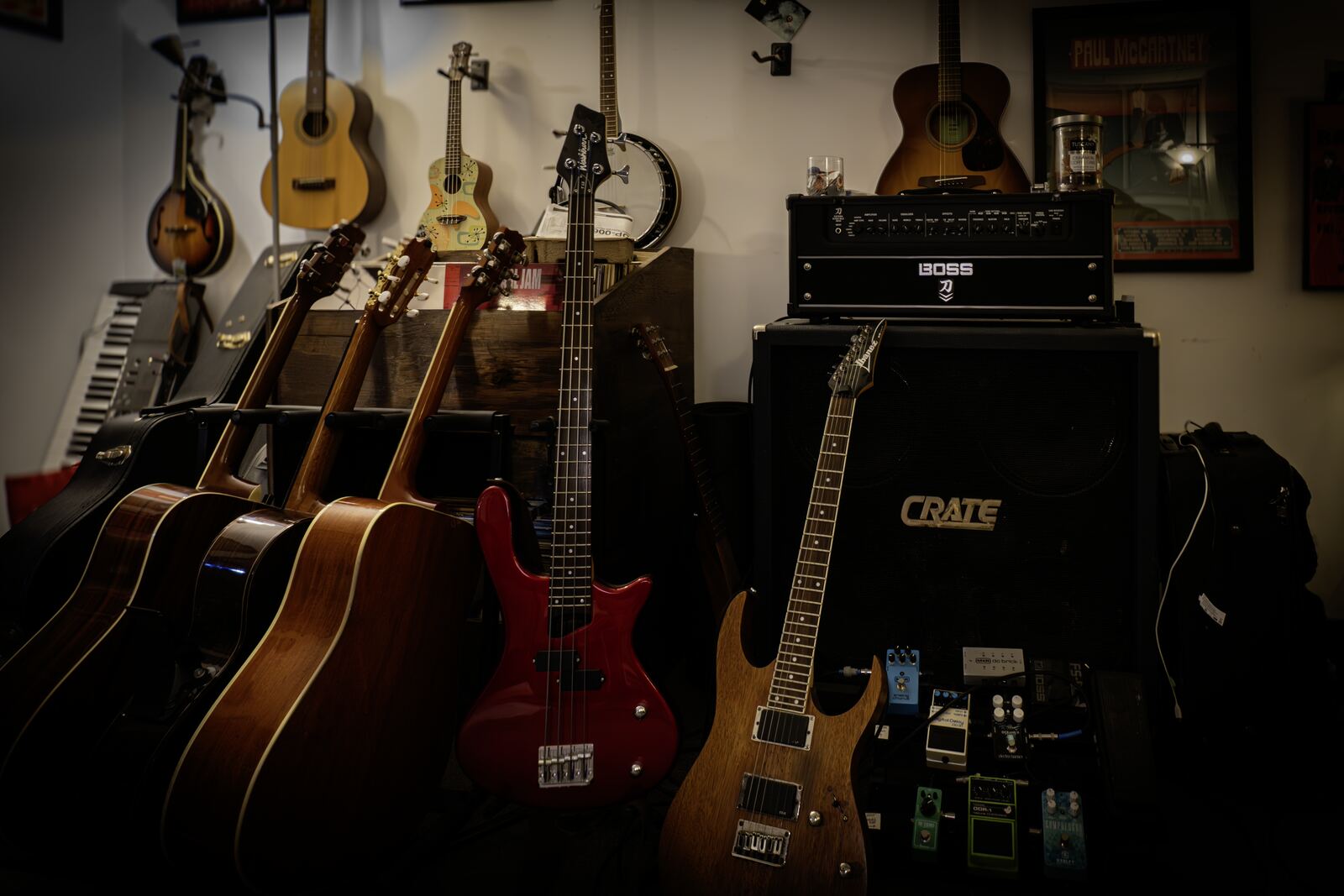
Buying an instrument means meeting terms that are rarely explained in one place: scale length, pickup types, solid and laminate tops, string alloys, signal order. These guides set out the standard options, what each one changes in sound and feel, and where the usual trade-offs lie. They contain no prices and no brand recommendations, because both change faster than the principles do.
Instruments and gear
Kinds of guitar
Classical and crossover nylon-string guitars, steel-string acoustics, and electric bodies from solid to hollow-body archtop. The guide explains pickups and scale length, then covers seven- and eight-string, baritone, twelve-string, resonator and travel guitars.
Kinds of bass
Precision-style, Jazz-style and humbucker-equipped basses; four, five and six strings; short, medium and long scale; fretted and fretless; passive and active electronics. It ends with bass strings, from roundwound to flatwound.
Acoustic guitars, tonewoods and strings
Body shapes from parlor to jumbo, solid and laminate tops, the tendencies usually attributed to spruce, cedar, mahogany, rosewood and maple, and string choices for steel-string and nylon-string guitars. It also explains why setup matters more than the wood on a first instrument.
Pedals and the signal chain
What each common pedal type does, a conventional pedalboard order and the reasoning behind it, amp effects loops, modelers and multi-effects units, power supplies, and a plan for a first board.
Electric guitar types
Stratocaster-, Telecaster-, Les Paul- and SG-style guitars, offsets, semi-hollows, archtops and superstrats compared by neck joint, scale, pickups and bridge, with fingerboard radius, vibrato systems and pickup switching.
Acoustic guitar types
Classical and flamenco guitars, twelve-strings, archtops, Selmer-Maccaferri-style gypsy jazz guitars and resonators, and the four kinds of acoustic-electric pickup with the usual complaint about each.
Guitar and bass amps
Why tube amps break up the way they do, how many watts you really need at home or next to a drummer, speakers, attenuators and headphone practice, and how a bass rig differs from a guitar rig.
Synthesizers explained
Oscillators, filters and envelopes explained in plain terms, the main synthesis methods, analog versus digital, and buying advice, with a small synth you can play in the browser.
Kinds of mandolin, banjo and ukulele
Ukulele sizes from soprano to baritone, high and low G, A- and F-style mandolins and the rest of the mandolin family, resonator and open-back banjos, tenor and plectrum banjos and the banjo-ukulele.
Practice and setup
What size guitar for a child
The fractional sizes from 1/4 to full, with approximate ages, heights and scale lengths, a size finder, a fit check a parent can do at home, nylon or steel strings for young hands, and when to move up a size.
Guitar setup explained
Action, neck relief, nut slots and intonation: what each one is, how it is measured, the symptoms each causes, and which adjustments belong with a technician.
Alternate guitar tunings
Drop, lowered and open tunings and DADGAD, note by note and with a button to hear each one, with baritone and seven-string ranges and what lower tunings ask of the strings.
Digital piano or keyboard for beginner lessons
Digital pianos, portable keyboards, stage pianos, synthesizers and MIDI controllers compared by keys, action, pedal and sound, and what a beginner needs at home.
How to practice an instrument
How long and how often to practice, a 15- and 30-minute session plan, slow practice with a metronome, and practice for young children and for adults with little time.
Free tools
A tuner, a metronome and chord charts for practising at home.
About these guides
These guides explain general principles. A particular instrument still has to be judged in the hands of whoever will play it, and that is what the advice at the free intro visit is for. How lessons work and what they cost are on the lessons and pricing pages.


