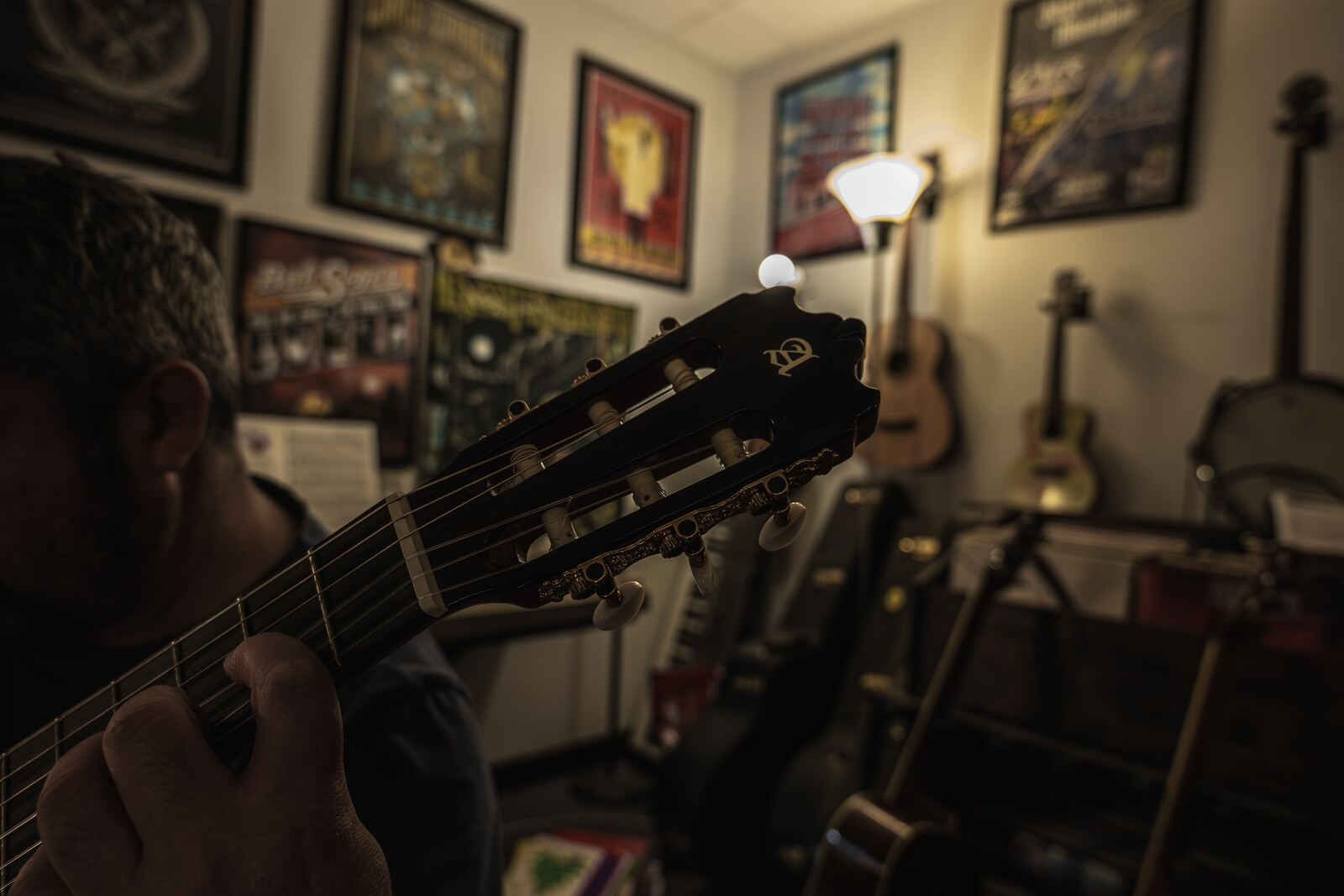
Fingerstyle means plucking the strings with the thumb and fingers instead of a pick, so one guitar can play a bass line, the chords and a melody at the same time. A good fingerstyle arrangement needs no singer and no band.
The picking hand
The thumb looks after the low strings and the fingers take the high ones. Most patterns start with the thumb and one or two fingers, and the hard part is not speed but independence: the thumb keeping a steady beat while the fingers do something else.
Patterns it is built on
- Arpeggio patterns: the notes of a chord played one at a time in a fixed order (for example thumb, index, middle, ring), the backbone of many ballads and classical études.
- Travis picking: the thumb alternates between two bass strings on every beat while the fingers add notes between and on top. Learned slowly, it becomes automatic, and then a melody can ride on it.
- Pinches: thumb and finger striking together, a bass note and a melody note at once.
- Percussive touches: muting with the side of the hand, or tapping the body, used in modern acoustic arrangements.
Steel or nylon strings
On a steel-string acoustic, fingerstyle sounds bright and full, and it is the sound of folk and acoustic blues picking. On a nylon-string classical guitar, it is softer and warmer, with more room between the strings for the fingers, and it leads into classical guitar repertoire. Many players use the flesh of the fingertip plus a little nail; some steel-string players add a thumbpick for a stronger bass.
Arrangements
A fingerstyle arrangement takes a song and fits melody, bass and harmony onto one guitar, often in an open or alternate tuning such as DADGAD or open D, where the open strings ring under the melody. If there is a song you want to play this way, bring it: Bill writes out an arrangement that fits your hands, simpler first, fuller later.
Questions
Should I learn to strum before fingerstyle?
It helps to know the basic open chords first, since most fingerstyle patterns are played over them. Strumming itself is not a requirement.
Do I need long nails for fingerstyle?
No. Many players use the fingertips only. Classical players shape their nails for tone, but that is a choice, not a starting condition.


