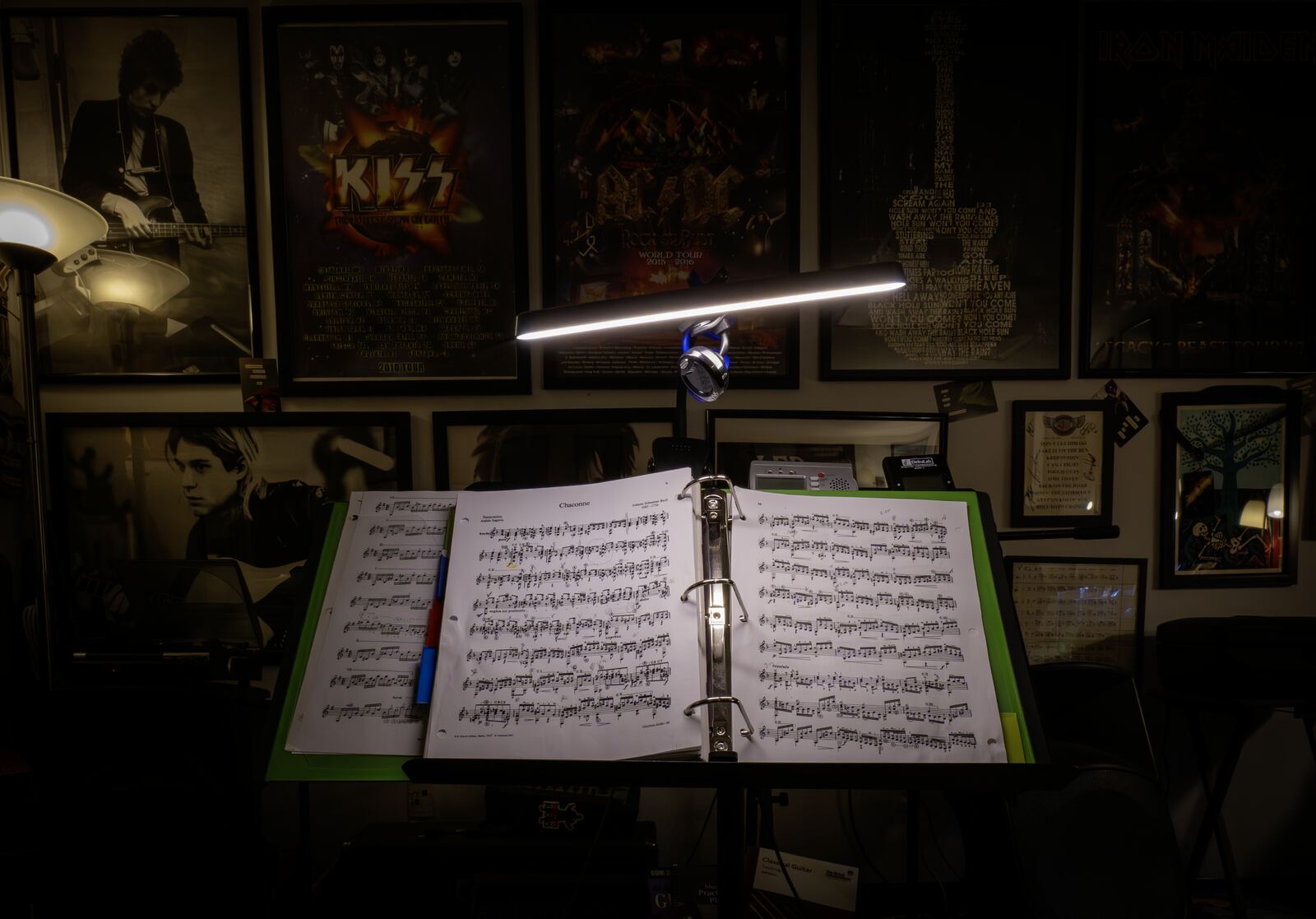
Before anyone signs up for lessons, they come to the studio and talk. It is not a trial lesson and there is nothing to prepare. If you decide to go ahead, weekly lessons are arranged afterwards.
What you talk about
- What you want to play. A song, a style, a goal such as an open mic in spring, or simply wanting to learn. This decides where the first lesson starts.
- The instrument. Whether the one you own is a good one to learn on, or what to look for if you are buying, from a shop in town or online.
- Bill. You meet the person you would see every week and can ask him anything about how lessons run.
Why the instrument comes up
A beginner can easily end up fighting the instrument instead of learning the music. Strings set too high above the fretboard make every chord hurt; a neck that needs adjusting makes notes buzz; a guitar whose notes drift sharp higher up the neck sounds wrong even when the fingers are right. Each of these is fixed by a setup, and it is far easier to sort out before the first lesson than after weeks of struggle. The guide to guitar setup explains what a setup changes.
For a child, the size of the instrument matters as much as its setup, which is why the child should come along to the visit.
What to bring
- Your instrument, if you have one.
- A few songs you would love to play. Song titles are enough; Bill writes out the music for students himself.
How to book
Call, text or email the studio and say you would like a free intro visit. The phone number is at the top of every page; the contact page also has the email address and opening hours.


