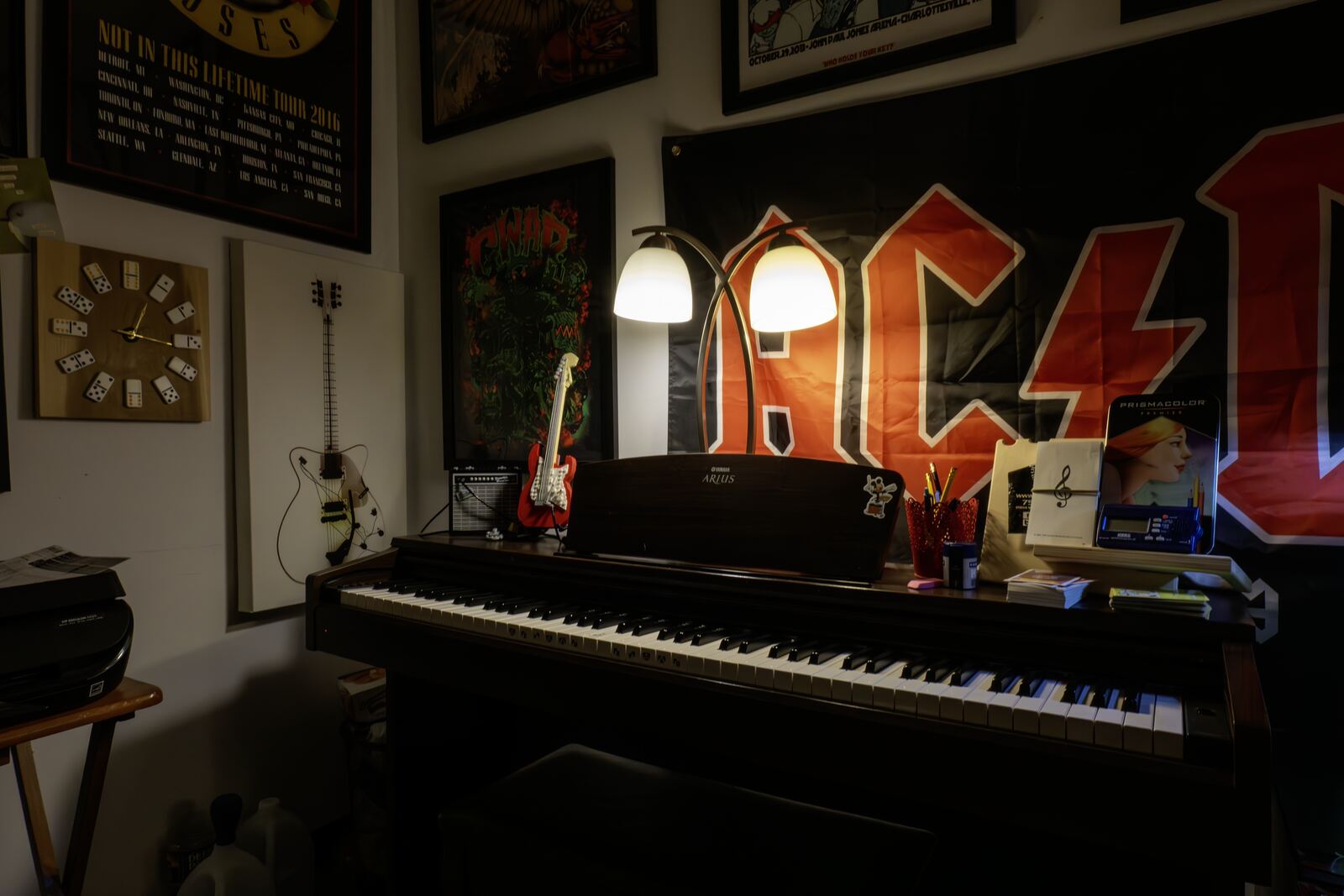
Bill grew up with a piano teacher for a mother. Piano lessons at B# Music are open to anyone from age four, and go wherever the student wants: first notes, classical pieces, or accompanying a singer.
Four kinds of keyboard instrument
| Instrument | Keys and action | Sound | Suits |
|---|---|---|---|
| Acoustic piano | 88 keys; each key throws a hammer at the strings | Acoustic; needs periodic tuning | Piano study at every level |
| Digital piano | 88 weighted, hammer-action keys, graded heavier toward the bass | Sampled piano sound; headphone output; no tuning | Piano study at home |
| Keyboard | Usually 61 keys, unweighted or semi-weighted | Many built-in sounds; light and portable | First lessons, chords, band parts |
| Synthesizer | Varies by model | Sound built and shaped by the player | Sound design and synth parts |
Weighted keys resist the finger the way acoustic piano keys do; semi-weighted keys add some springiness; unweighted keys press down with almost no resistance. The guide to digital pianos and keyboards compares them in more detail, including stage pianos and MIDI controllers.
Unlike a keyboard that plays back recordings of instruments, a synthesizer builds its sound from scratch. Oscillators generate the raw waveform (sine, sawtooth, square). Filters remove part of the frequency range to shape the tone; a low-pass filter, the most common kind, darkens it. Envelopes control how the sound changes over time, usually in four stages: attack, decay, sustain and release. The guide to synthesizers explains them, and lets you try each control on a synth that plays in the browser.
What to buy to start
For piano, the usual recommendation is a full-size digital piano: 88 keys, weighted, with hammer action. Weighted keys build the finger strength and control an acoustic piano needs, and 88 keys cover the whole repertoire. Get a sustain pedal from the start.
A 61-key keyboard can work for a beginner and suits synth and band parts, but a student who goes on to piano repertoire will need the full range and weighted keys sooner or later. If you are about to buy, ask at the free intro visit first.
What piano lessons cover
- Reading treble and bass clef. Piano music is written on the grand staff: two staves read at once, treble for the right hand and bass for the left in most music.
- Hand independence. The two hands play different rhythms and lines at the same time, built up from simple patterns.
- Chords and accompaniment. Triads, inversions and accompaniment patterns for playing songs and backing a singer.
- Scales, fingering and ear training.
- Pieces and songs you choose. A song is written out for piano, often as the melody over simple left-hand chords at first, with the full arrangement added as the hands become more independent.
Lessons are for both children and adults. Keyboard players who want to write their own material can combine it with songwriting.
Questions
Can adults start piano with no experience?
Yes. Reading both clefs is taught as you go, so nothing is needed beforehand.
What is the youngest age for piano lessons?
Four.
What do piano lessons cost?
$35 for each weekly 30-minute lesson.


